
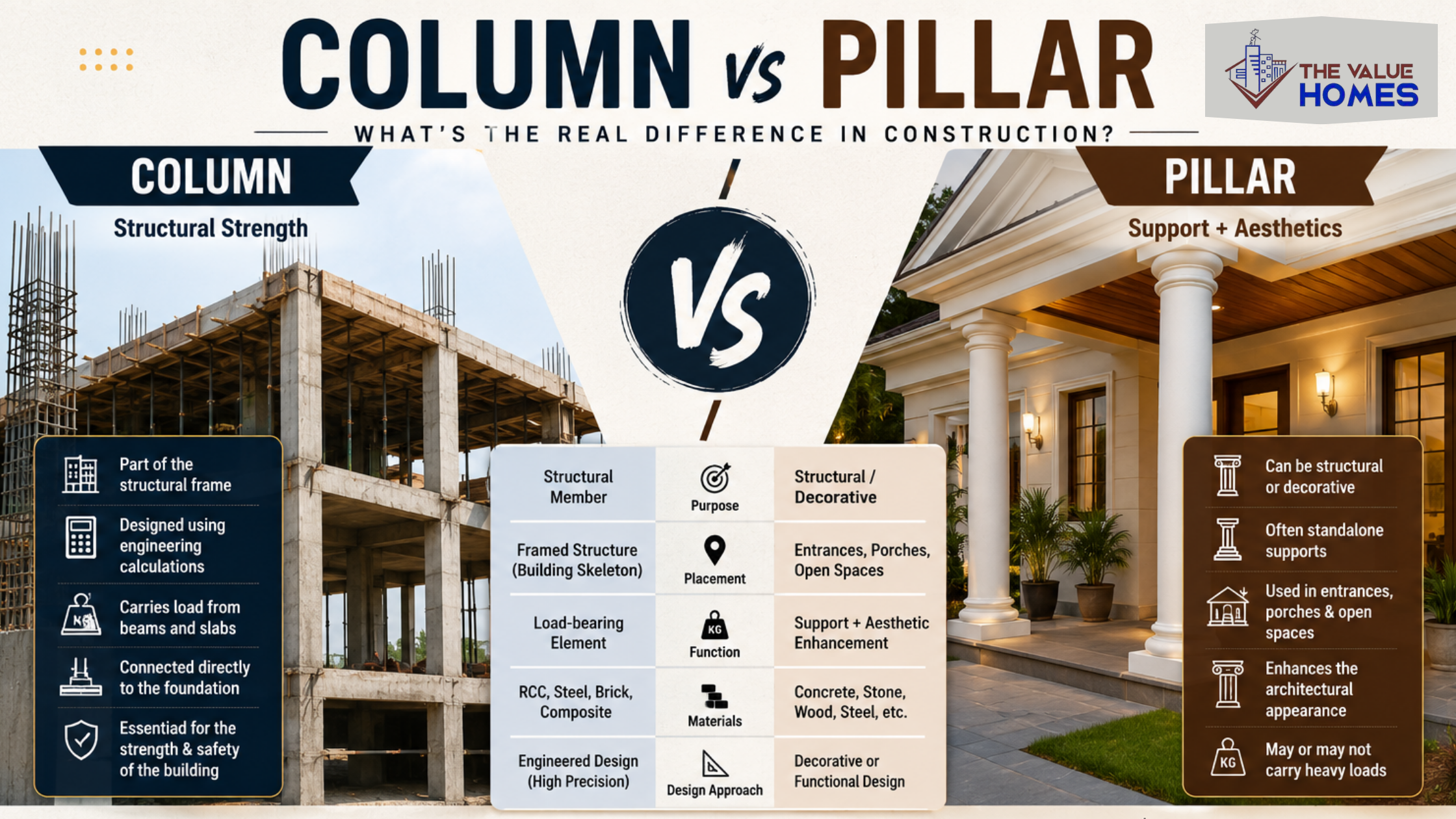
During the process of building a house, most people come across terms such as columns and pillars, which are used interchangeably. However, knowing the Column vs Pillar difference is vital since both have different purposes and functions in construction projects. Although they may appear alike, columns and pillars vary in their purposes, uses, designs, and function. Understanding these variations will help one become knowledgeable when choosing between these two terms during construction, thus making the right choices.
Understanding the Basics of Columns and Pillars
Columns and pillars are vertical structural members that are used in construction projects to support structures. The main function of these two is transferring loads from the upper parts of the building to its foundation. Despite having similar purposes, columns and pillars have some significant variations.
The definition of a column is a structural element that is designed to carry compressive loads. In construction, it is used as a structural element in buildings, and it is specifically designed according to the loading requirements of the structure.
Pillar, on the other hand, is a free-standing vertical structure. Pillars are mostly used for their architectural appearance in buildings.
This understanding is key in construction projects today.
Column vs Pillar – Key Differences
The major distinction between a column and a pillar comes in terms of structural function and positioning.
Columns
- Primarily used in framed structures
- Designed using engineering calculations
- Carry loads from beams and slabs
- Connected directly to the foundation
- Common in modern RCC buildings
Pillars
- Can be structural or decorative
- Often standalone supports
- Used in entrances, porches, and open spaces
- May enhance the architectural appearance
- Seen in traditional and decorative structures
In other words, all columns can work as pillars in some situations, but all pillars may not necessarily be structural columns.
What Is a Column in Construction?
A column is among the most vital structural elements in modern constructions. The column transmits the load from the roof, slabs, and beams to the footing and foundation.
Columns are generally made using:
- Reinforced Cement Concrete (RCC)
- Steel
- Brick masonry
- Composite materials
In residential houses, the most common type of columns is RCC columns.
Features of a Column
- Designed based on load calculations
- Built according to structural drawings
- Usually rectangular, square, or circular
- Essential for multi-storey buildings
- Helps resist bending and compression forces
Without properly designed columns, a building may become structurally weak and unsafe.
What Is a Pillar in Construction?
A pillar is a vertical supporting structure which may be functional, aesthetic, or both. Pillars have been in use since time immemorial, and can be found in temples, old buildings, verandas, and entrances among other places.
Modern houses also make use of pillars to enhance the beauty of their structures while at the same time offering support to the roof or portico.
Features of a Pillar
- Often visible as an architectural element
- Can be decorative in design
- Used in open spaces and entrance structures
- Available in different shapes and finishes
- May or may not carry heavy structural loads
Decorative pillars are normally made using concrete, stone, wood, or metal depending on the design of the house.
Importance of Columns in Modern Homes – Column vs Pillar Understanding
Columns are very significant in modern RCC framed buildings because they form the backbone of the buildings.
Benefits of Properly Designed Columns
- Improve overall building strength
- Distribute structural loads evenly
- Increase earthquake resistance
- Support future floor expansion
- Reduce the risk of structural cracks
Well-designed columns are necessary in ensuring safety and longevity of buildings.
Importance of Pillars in Home Design
Pillars are often used to enhance the appearance of a property while providing support in selected areas.
Benefits of Pillars
- Add elegance to exterior design
- Improve porch and balcony support
- Create a grand entrance appearance
- Blend traditional and modern architecture
- Increase visual appeal
Many luxury homes use decorative pillars to create a premium look.
Materials Used for Columns and Pillars
The choice of materials depends on the structural requirement, design preference, and budget.
Common Materials for Columns
- RCC (Reinforced Cement Concrete)
- Structural steel
- Brick masonry
- Composite sections
Common Materials for Pillars
- Concrete
- Natural stone
- Granite
- Wood
- Steel
- Decorative molded materials
In most residential projects, RCC remains the preferred material because of its strength, durability, and cost-effectiveness.
Can a Pillar Be Called a Column?
It is one of the most frequently asked questions by homeowners.
From a technical point of view, there may be cases when a structural pillar that bears any loads behaves like a column. Nevertheless, in engineering science, columns are structural components that bear loads in a frame structure.
Pillars are generally used in a more broad sense and may be decorative vertical constructions.
That is why professional civil engineers and architects use the term “column” to refer to such structures.
Common Mistakes People Make
Homeowners are usually concerned about the aesthetic side of pillars but forget about proper column construction.
Common Construction Mistakes
- Reducing column size to increase room space
- Using poor-quality concrete
- Improper steel reinforcement placement
- Ignoring soil testing before design
- Removing structural columns during renovation
These mistakes can seriously affect the stability of a building.
Which Is More Important in House Construction?
Modern housing requires more attention to columns than to pillars since columns have a direct influence on the stability of the building.
Pillars mainly contribute to:
- Additional support
- Exterior appearance
- Architectural enhancement
A strong column layout designed by experienced structural engineers ensures that the house remains stable for many years.
How Professionals Decide Column Placement
Column placement is carefully planned based on:
- Soil condition
- Building load
- Number of floors
- Room layout
- Beam alignment
- Architectural design
Improper positioning of the columns will add to the expenses of the construction and will decrease efficiency.
This is the reason why the role played by professional planners and engineers becomes very crucial during the construction of houses.
Conclusion
Column vs Pillar knowledge can be advantageous to homeowners when constructing their houses. Even though both are vertical structures, while columns are mainly meant for supporting weight and making the house stable, pillars are mostly meant for support and adding beauty to the house.
In the case of RCC houses, proper construction of columns makes the house more secure, strong, and durable. On the other hand, pillars help in adding beauty to the house. Using the best construction techniques and materials will result in construction of a house that is both beautiful and durable.
The Value Homes ensures that each and every one of its projects is well balanced in terms of structure and construction quality.