
The Value Homes

Column vs Pillar
Construction and Interior

Column vs Pillar: What’s the Real Difference in Construction?

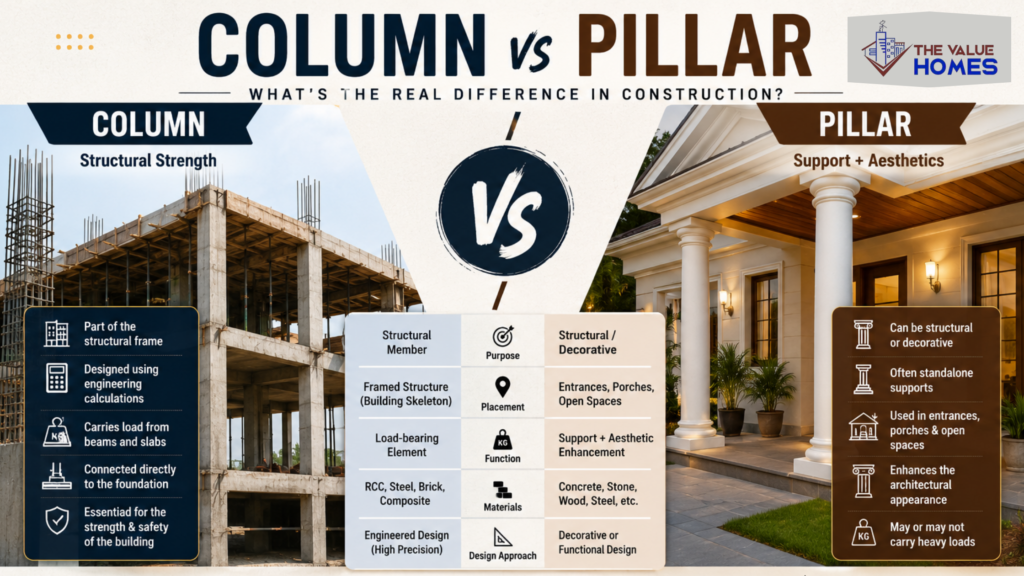
During the process of building a house, most people come across terms such as columns and pillars, which are used interchangeably. However, knowing the Column vs Pillar difference is vital since both have different purposes and functions in construction projects. Although they may appear alike, columns and pillars vary in their purposes, uses, designs, and function. Understanding these variations will help one become knowledgeable when choosing between these two terms during construction, thus making the right choices. Understanding the Basics of Columns and Pillars Columns and pillars are vertical structural members that are used in construction projects to support structures. The main function of these two is transferring loads from the upper parts of the building to its foundation. Despite having similar purposes, columns and pillars have some significant variations. The definition of a column is a structural element that is designed to carry compressive loads. In construction, it is used as a structural element in buildings, and it is specifically designed according to the loading requirements of the structure. Pillar, on the other hand, is a free-standing vertical structure. Pillars are mostly used for their architectural appearance in buildings. This understanding is key in construction projects today. Column vs Pillar – Key Differences The major distinction between a column and a pillar comes in terms of structural function and positioning. Columns Pillars In other words, all columns can work as pillars in some situations, but all pillars may not necessarily be structural columns. What Is a Column in Construction? A column is among the most vital structural elements in modern constructions. The column transmits the load from the roof, slabs, and beams to the footing and foundation. Columns are generally made using: In residential houses, the most common type of columns is RCC columns. Features of a Column Without properly designed columns, a building may become structurally weak and unsafe. What Is a Pillar in Construction? A pillar is a vertical supporting structure which may be functional, aesthetic, or both. Pillars have been in use since time immemorial, and can be found in temples, old buildings, verandas, and entrances among other places. Modern houses also make use of pillars to enhance the beauty of their structures while at the same time offering support to the roof or portico. Features of a Pillar Decorative pillars are normally made using concrete, stone, wood, or metal depending on the design of the house. Importance of Columns in Modern Homes – Column vs Pillar Understanding Columns are very significant in modern RCC framed buildings because they form the backbone of the buildings. Benefits of Properly Designed Columns Well-designed columns are necessary in ensuring safety and longevity of buildings. Importance of Pillars in Home Design Pillars are often used to enhance the appearance of a property while providing support in selected areas. Benefits of Pillars Many luxury homes use decorative pillars to create a premium look. Materials Used for Columns and Pillars The choice of materials depends on the structural requirement, design preference, and budget. Common Materials for Columns Common Materials for Pillars In most residential projects, RCC remains the preferred material because of its strength, durability, and cost-effectiveness. Can a Pillar Be Called a Column? It is one of the most frequently asked questions by homeowners. From a technical point of view, there may be cases when a structural pillar that bears any loads behaves like a column. Nevertheless, in engineering science, columns are structural components that bear loads in a frame structure. Pillars are generally used in a more broad sense and may be decorative vertical constructions. That is why professional civil engineers and architects use the term “column” to refer to such structures. Common Mistakes People Make Homeowners are usually concerned about the aesthetic side of pillars but forget about proper column construction. Common Construction Mistakes These mistakes can seriously affect the stability of a building. Which Is More Important in House Construction? Modern housing requires more attention to columns than to pillars since columns have a direct influence on the stability of the building. Pillars mainly contribute to: A strong column layout designed by experienced structural engineers ensures that the house remains stable for many years. How Professionals Decide Column Placement Column placement is carefully planned based on: Improper positioning of the columns will add to the expenses of the construction and will decrease efficiency. This is the reason why the role played by professional planners and engineers becomes very crucial during the construction of houses. Conclusion Column vs Pillar knowledge can be advantageous to homeowners when constructing their houses. Even though both are vertical structures, while columns are mainly meant for supporting weight and making the house stable, pillars are mostly meant for support and adding beauty to the house. In the case of RCC houses, proper construction of columns makes the house more secure, strong, and durable. On the other hand, pillars help in adding beauty to the house. Using the best construction techniques and materials will result in construction of a house that is both beautiful and durable. The Value Homes ensures that each and every one of its projects is well balanced in terms of structure and construction quality.

Plan Your Dream Home Before Construction
Construction and Interior

How to Plan Your Dream Home Before Construction Starts

It is one of life’s biggest milestones to build your dream home. However, it is extremely important to plan your dream home before construction starts to avoid costly mistakes. Many people get excited and start with the construction of their homes as quickly as possible. Nevertheless, without proper planning, it may end in disaster. Planning your dream home before construction starts is crucial. This will help you save more and avoid mistakes in designing your home. In this guide, let’s look at the important steps to plan your dream home before construction starts. Define Your Budget Clearly First and foremost, it is crucial to define your budget clearly before planning your dream home. There is more to construction costs than just buying bricks and cement for construction. You should consider costs such as land preparation, construction materials, labor costs, design costs, electrical work, plumbing work, and interior work. It is crucial to set a realistic budget for construction to help you make better decisions when it comes to designing and choosing materials and size for your home. You should always have an extra 10-15% in your budget for unexpected costs. Choose the Right Plot The planning of your home should start with the understanding of the land on which the home will be constructed. The dimensions, shape, soil, and location of the land are important factors in the planning of the home’s construction. Things to Check on the Land When Planning to Buy a Plot Include: The choice of the land will determine the success of the building process and the value of the home. Understand Your Family’s Needs Each family has its unique requirements. The planning of your home should be done with consideration of your family’s needs. Questions to Ask Yourself Include: Planning with consideration of your family’s needs will ensure the home remains functional for many years. Work with a Professional Architect or Builder A professional architect or construction company can assist you in turning your ideas into a practical design. They are aware of safety, space, ventilation, and other construction techniques. An experienced construction company can assist you in the following ways: Working with professionals can help you avoid mistakes and ensure that your dream home is constructed to high standards of quality. Layout Planning for Your Dream Home Before Construction A good layout can help you enjoy greater comfort and convenience in your home. You should carefully plan the layout of rooms, windows, and doors to ensure greater ventilation and natural lighting. This can help you create a spacious and comfortable home Here are some tips for better layout planning for your dream home before construction: With better layout planning for your dream home before construction, you can ensure that every aspect of your home is designed to provide greater convenience and comfort for long-term use. Consider Vastu and Direction (If Preferred) Most people prefer to keep Vastu in mind while planning their house. Although it is not mandatory, it can make an impact. Some of the Vastu tips are as follows: If Vastu is important to you, discuss it with your architect during the planning stage. Select the Right Construction Materials The life of your house depends on the quality of construction materials. The selection of right materials during the planning stage can help control costs and ensure long-lasting construction. Some of the important materials are as follows: Using quality materials reduces maintenance problems in the future. Plan for Utilities and Infrastructure Your home should be designed with proper electrical, plumbing, and drainage systems. Planning these elements early prevents costly changes later. Important things to plan include: Good infrastructure planning makes your life more convenient and ensures your safety. Think About Energy Efficiency Modern homes should be designed with energy efficiency in mind. This helps you save money on electricity and live in an eco-friendly home. Features to look for: These features help reduce your electricity bills and make your home more comfortable Create a Clear Construction Timeline Before construction begins, discuss the project timeline with your builder. This helps prevent delays and ensures smooth construction. Construction timeline: Regular monitoring during construction ensures the project stays on track. Conclusion Plan your dream home before construction begins to ensure a smooth and successful building process. From setting a clear budget and choosing the right plot to designing a practical layout and selecting quality materials, proper planning helps avoid costly mistakes and delays. With careful preparation and the support of experienced professionals, you can turn your vision into a beautiful and comfortable home that lasts for years. Build Your Dream Home with The Value Homes If you are planning to build your dream home, The Value Homes offers trusted and professional construction services. Our team focuses on quality construction, modern designs, and timely project completion to ensure every home is built with care and precision. Whether you are planning a new house or looking for reliable construction support, The Value Homes is here to help you every step of the way. 📞 Call / WhatsApp: +91 98840 94443  🌐 Website: thevaluehomes.in

Tile joint grout problems
Tiles & Marble Laying

Tile Joint (Grout) Problems: Why They Crack & How to Prevent It

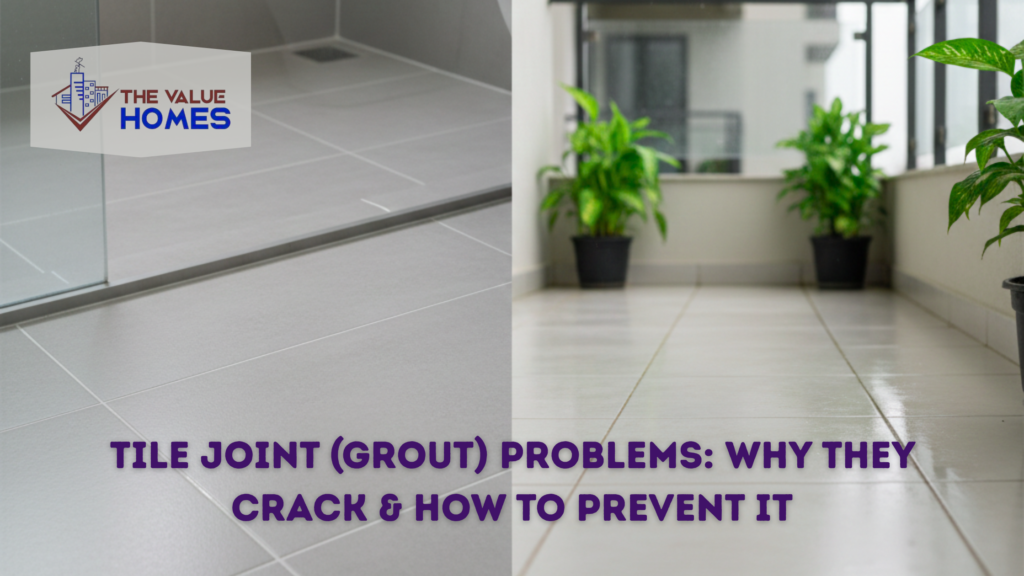
Tile joint grout problems are among the most prevalent yet often neglected problems in contemporary homes. As homeowners pay attention to tile designs and appearance, weak and cracked grout joints can quietly lead to water seepage, tile looseness, and long-term damage, particularly in areas where moisture is a problem, such as bathrooms, balconies, and kitchens. It is important to understand the reasons behind grout cracking and learn how to prevent it in order to protect your flooring from damage and avoid costly repairs down the line. What Is Tile Grout & Why Is It Important? Tile grout is the substance that is filled between tiles to: Although it may seem insignificant, poor grout can cause damage to your entire flooring system. Common Tile Joint (Grout) Problems in Chennai Homes 1. Cracks in Tile Joints This is the most common issue. prevalent problem. Hairline cracks gradually increase and allow water to seep under the tiles. 2. Grout Powdering or Breaking Low-quality grout or incorrect mixing of grout causes joints to powder or break down with time. 3. Water Seepage Through Joints Very common in: Water seepage makes the tile adhesive and tile slab below weaker. 4. Tile Edges Becoming Loose Tiles come loose as the grout breaks down. Tiles begin to sound hollow or pop up. 5. Stains & Black Fungus Grout joints easily absorb moisture, leading to: Why Do Tile Joints Crack? (Root Causes) 1. Poor Surface Preparation Tiles and grout settle unevenly on dusty or uneven surfaces. 2. Wrong Grout Selection Using normal cement grout in wet areas instead of waterproof or epoxy grout is a major mistake. 3. Incorrect Mixing Ratio Too much water reduces grout strength, resulting in cracks and powdering. 4. Lack of Expansion Gaps Tiles expand and contract with temperature changes. Without expansion gaps, tile joints develop pressure and crack. 5. Structural Movement Natural building movement, particularly in older buildings, impacts grout lines directly. 6. Chennai Climate Factors Humidity, heat, and monsoon rains accelerate grout degradation if unprotected. Why You Should Never Ignore Grout Cracks Ignoring small grout cracks can lead to:  ❌ Water seepage beneath tiles❌ Damage to waterproofing membranes❌ Loose or broken tiles❌ Ceiling dampness in apartments❌ Full tile replacement at a high cost later 👉A small joint crack can result in a large renovation bill. How to Prevent Tile Joint Problems (Right Way) 1. Choose the Right Grout 2. Correct Tile Installation Methodology 3. Waterproofing Before Tile Laying Especially important for: Proper waterproofing shields grout from moisture exposure. 4. Expansion Joints Where Needed Facilitates natural tile movement without grout stress. 5. Professional Installation DIY or unskilled labor often causes long-term grout failure. When Should You Call a Professional? You should consult experts if: Temporary grout fix won’t work. How The Value Homes Solves Grout & Tile Problems At The Value Homes, we don’t just repair what’s visible—we find the root cause of the issue.  ✔ Proper surface analysis✔ Appropriate grout selection according to usage area✔ Waterproofing before re-tiling✔ Expert tile & marble laying✔ Durable & easy-to-maintain solutions That’s why homeowners trust The Value Homes as their No.1 Home Improvement Partner in Chennai. Final Thoughts Tile joints may look small, but their impact is huge.Addressing grout problems early can save money, avoid water leakage, and increase tile lifespan for years to come. If your property displays symptoms of grout damage, don’t delay until major repairs are required. 👉 The Value Homes is here to assist you—from inspection to comprehensive tile solutions.

House Renovation
House Renovation

7 Common House Renovation Mistakes to Avoid

House renovation can be exciting, but it might turn stressful in no time if the right decisions are not made on time. Many Chennai homeowners face problems due to overlooking of common renovation mistakes while renovation, which includes unexpected expenses or poor workmanship. Proper planning and professionals will help your renovation journey to be smooth, cost-effective, and long-lasting. Renovating a house is a crucial aspect of everyone’s life. At The Value Homes, we are known to offer end-to-end house renovation services in Chennai, and we’ve seen what works—and what doesn’t. Here are the 7 most common mistakes homeowners make during house renovation and how you can avoid them. Starting House Renovation Without a Clear Plan One of the greatest mistakes in house renovation involves beginning work without details on what needs to be done. Many homeowners decide to renovate “step by step,” which eventually leads to confusion and delays in work. Why this causes problems: How to avoid it: Clearly define the renovation goals: painting, flooring, waterproofing, or complete remodeling. A professional site inspection helps create a structured plan before work commences. House Renovation Mistakes Homeowners Should Avoid: Choosing the Cheapest Contractor Choosing a contractor solely on the price is one of the common mistakes made while renovating a house. Why it’s risky: How to avoid it: Always check  for previous work, qualities of materials, and transparency in pricing. A reliable renovation contractor in Chennai focuses on durability, not shortcuts. Ignoring Waterproofing During Renovation Many homeowners in Chennai focus on interiors and skip waterproofing in order to save costs. Why this is a serious issue: How to avoid it: Waterproofing in house renovation, particularly on the terraces, bathrooms, and external walls, would make a long-lasting protective shield for the house. Poor Tile and Marble Laying Work Just selecting beautiful tiles is not enough if the quality of installation is poor. Common problems: How to avoid it: Select the professionals who will do proper leveling, spacing, and laying techniques with adhesives. For more quality and good-looking tile and marble laying, a skilled professional increases not just the aesthetic appeal, but also the durability. Rushing the Final Finishing Stage Work is often finished in a rush just to “complete” the renovation as fast as possible. Why this affects your home: How to avoid it: Allow adequate time to complete work, such as skirting, touching up, polishing and final inspection. Finishing well is highly rewarding visually. Using Low-Quality Paint and Materials Using cheaper paints and materials, while apparently economic, generates very frequent maintenance. Problems caused: How to avoid it: Use quality, water-resistant paints that can keep up with the Chennai weather. Professional painting guarantees long-lasting results and a premium finish. Hiring Multiple Contractors for Different Works Managing different painting, flooring, and waterproofing teams generates a lot of coordination problems. Why this leads to trouble: How to avoid it: Finally, pick only one team that offers comprehensive services of renovation in a house in Chennai: end-to-end execution ensures greater coordination and accountability. Why Choosing the Right House Renovation Partner Matters A successful renovation of the house is not just about the design; rather, it’s all about proper planning, skillful execution, and attention to detail. Staying away from these common mistakes will save one from wasting time, money, and developing stress. At The Value Homes, we provide: —all under one roof. Planning a House Renovation in Chennai? Talk to The Value Homes Before You Renovate Get expert guidance, transparent pricing, and quality workmanship you can trust. Call us: 98840 94443Trusted Home Finishing Experts in Chennai 🎨 Painting | 🧱 Construction | 🛠 Renovation | 💧 Waterproofing | 🧩 Tile & Marble Laying

Paint
Paint

A Complete Guide to Choosing the Right Paint for Your Home

Paint is one of the easiest yet most powerful ways to change your home. Whether you’re renovating a whole house or just freshening up one room, the kind of paint you decide on affects everything-from appearance and durability to mood and maintenance. With so many colours, finishes, and brands on offer today, choosing the right one can often be daunting. This guide breaks it down step-by-step so that you make confident, beautiful decisions for every corner of your home. Why Choosing the Right Paint Matters The paint you select affects: It could be peeling, fading, mismatched colors, or high costs of repainting. That is why it is important to understand how paint behaves in various rooms and under different lighting conditions. Paint Types & Where to Use Them Not every paint fits into every surface. Let me break it down: 1.  Water-borne (Acrylic Emulsion) 2. Enamel 3. Distemper 4. Painting in texture 5. Oil-Based Paint Understanding the type of paint assures that the paint used will last longer and provide effective outcomes wherever it is used. Colour Selection by Purpose of the Room Colour psychology plays an important role in home design. Before choosing paint, think about the purpose of each room. Living Room Warm neutrals like beige, ivory, taupe, or light grey make for a room that is inviting, especially when paired with furniture. Bedroom Soft pastels—lavender, sage green, baby blue—promote calmness and help with relaxation. Kitchen Semi-gloss paint in lighter colours is a good choice since it is resistant to stains and easier to clean. Bathroom Try using water-resistant paint-white, blue, sea green, or grey for a cleaner and fresher look. Check Lighting Before Choosing Paint Lighting completely changes how paint looks on your walls. Natural Light Artificial Light Always test a paint patch in morning, afternoon, and evening light to understand its true look. How to Pick the Right Paint Finish for Each Room The finish affects shine, maintenance, and overall appearance. Matte Finish Satin Finish Semi-Gloss Finish Gloss Finish Preparation of the surface plays an important role Even premium paint won’t look good on an unprepared surface. Make sure to: Correct surface preparation can double the lifespan of your painting job.  How to Choose the Best Paint for Interior Walls Interior walls face daily wear—fingerprints, dust, moisture, and sunlight. Here’s how to choose the right paint: ✔ Consider washability Go for washable or stain-resistant variants if you have kids or pets. ✔ Pick low-VOC paints Better for health, especially in bedrooms and study rooms. ✔ Match with furniture Your sofa, curtains, wooden décor, and flooring should complement your paint shades. ✔ Think long-term Premium paints last 5–7 years without major fading. Maintenance and Durability Tips To keep your home looking fresh: Good maintenance  also keeps your paint looking new even after years of application. Budgeting: Price vs. Value Paint prices vary based on: Premium paints be more costly at the outset but offer long-term savings because you won’t need to repaint as frequently. Some recommended brands in India are:  These brands come with a wide range of shades and high-performing products within variable budgets. Final Checklist Before You Buy Before finalizing your paint selection, ask yourself: If all answers are yes, you’re good to go! Conclusion It will be easy to select the proper paints for your house once you know about colours, finishes, lighting, durability, and room purpose. However, even with all that knowledge, a faultless finish depends on proper surface preparation and expert application. That’s where The Value Homes comes in to make life easier. From painting to waterproofing, complete renovation, tile & marble laying, and surface treatment, The Value Homes offers a range of high-quality, professional home improvement services throughout Chennai. If you want your home to look clean, stylish, durable, and just right to the perfect finish, then just get in touch. 📞 Contact The Value Homes: 98840 94443 For expert painting and home renovation support, one call is all you need.

Scroll to Top